
Programming and coding tuition for school students
Help with the programming in school IT and Cambridge Computer Science, from understanding an algorithm to writing and testing code. Your child learns with a tutor who follows their course and an Education Consultant who plans and oversees the tuition.
Learning to solve the problem behind the code
A student can follow a worked example and still feel stuck when asked to write a program alone. We help your child work out what the program needs to do, break the task into smaller steps and turn those steps into code they understand.
Lessons start with their schoolwork and the skills they need next. The tutor asks your child to explain their thinking, try an approach and test it. When something goes wrong, they work through the cause together.

Programming support for your child’s course
Starting to program
Build the foundations needed for schoolwork: stored values, decisions, repeated steps and simple algorithms. Your child practises with small problems before combining ideas in a larger task.
IT from Grade 10 to matric
Programming help for CAPS and IEB Information Technology. We follow the school’s language and development environment, with attention to planning, practical work, debugging and exam questions.
Cambridge Computer Science
Support for the algorithms and programming in IGCSE, AS and A Level. Lessons follow the syllabus and exam year, including pseudocode, tracing algorithms and the practical programming required by the course.
Plan it, write it, test it
Before opening the editor, we identify the inputs, the expected output and a simple example. Your child can then work out the decisions and repeated steps the solution needs. Depending on the course, we use written steps, diagrams or pseudocode to make the logic clear.
As they write, we check what each part of the code does. A loop that runs once too often, for example, gives us a reason to trace the changing values and check the stopping condition. Your child learns a way to investigate errors that they can use in the next task.
Testing includes ordinary inputs and the limits a program is meant to handle. We also practise explaining why a solution works, so your child can explain the same ideas in a written exam.
The language used at school
Tell us which programming language and software your child uses. We use those details and their current schoolwork to choose a suitable tutor.
Cambridge courses may use languages such as Python, Java or Visual Basic, with different requirements for different assessments. A school IT course may use a different environment. Lessons follow the student’s actual setup, including the required pseudocode conventions, rather than introducing another language alongside it.

School projects and practical assessments
A tutor can help your child understand a project brief, plan the stages and learn a technique they need to use. They can practise that technique on a separate example before returning to their own work. The student makes the decisions and writes the assessed code, following the school’s rules.
If the difficulty also involves IT theory or CAT applications, include that in your enquiry. IT and CAT are separate subjects: CAT concentrates on using applications and handling information. We tutor both, so the programme can address the subject your child actually takes.

Our approach
Assess
First, we assess the student to identify gaps in the fundamentals (what content don’t they know?) and common error types (how are they losing marks?).
Match
Then, we select a mentor from our team of Programming tutors. It is crucial for a student to ‘like’ their tutor and look forward to the lessons.
Teach
The trained tutor comes to the house for high-impact one-on-one lessons where they actually teach the ideas and concepts.
Practise
We set structured homework for the student to do in between lessons. When it comes to learning, practice is key.
Engage
We use projects, experiments, and practical demonstrations to excite the student and pique their interest.
Test
The student writes regular mock tests so that they can practise their skills under exam conditions, and we can monitor their progress and increase their confidence.
Refine technique
A student needs to familiarise themselves with the technical requirements of the memorandum in order to excel. We teach test-taking techniques.
Supervise
We supervise, guide and support the programme to ensure a great result.
One-on-one tuition, at home or online
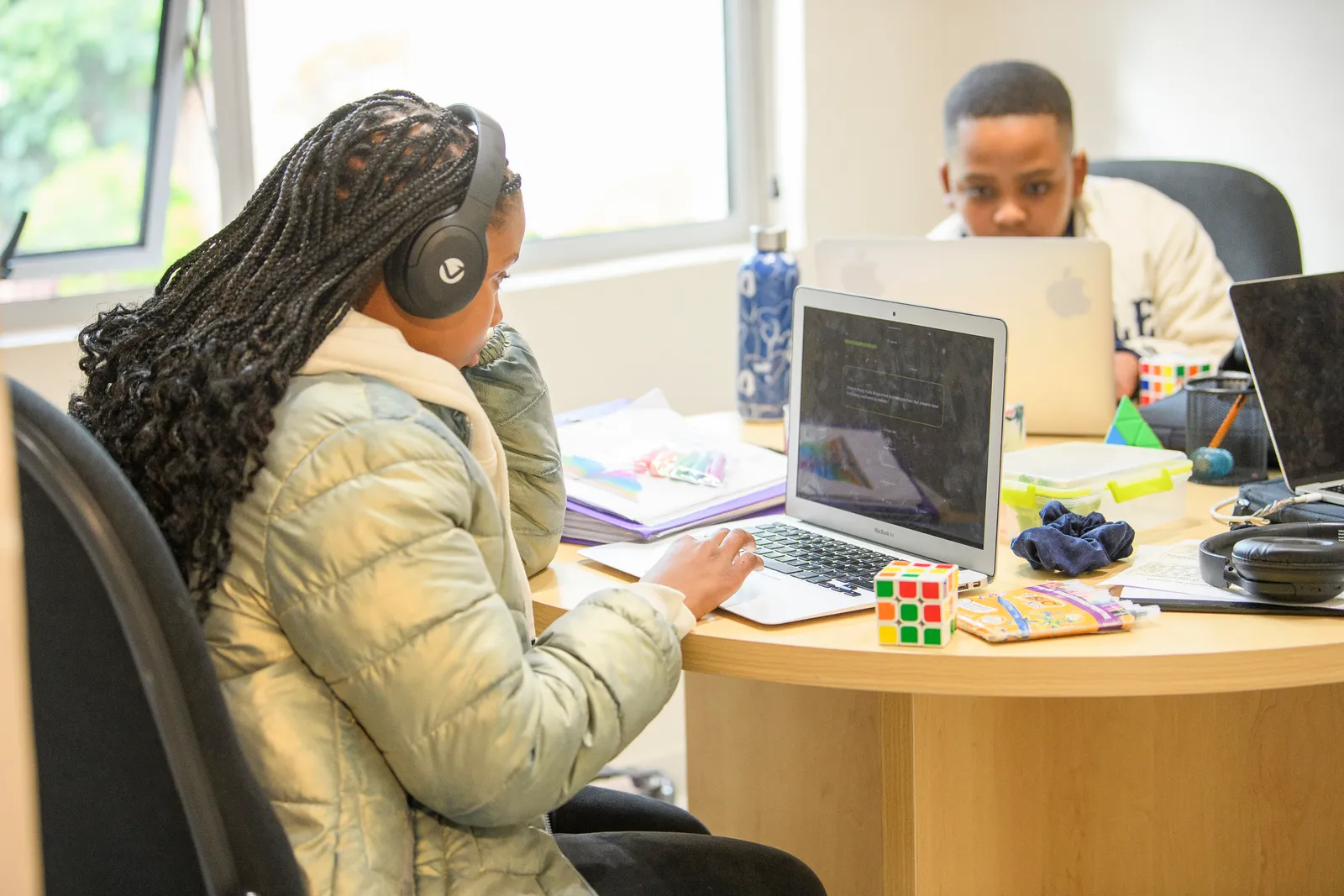
We offer lessons at home in Johannesburg, Cape Town and Pretoria, and live online tuition. Your child works on their own computer, talks through the problem and gets feedback while they practise.
Their Education Consultant, the senior team member responsible for the programme, chooses and supervises the tutor and reviews progress with your family. Lessons can address an immediate school task while building the skills needed to work more independently.
With this approach, our students frequently improve their marks by 20%.
Questions about Programming tuition
Can you help a beginner with school coding?
Yes. We can start with the programming concepts your child’s course introduces and build from there. Send their grade and current work so we can understand the starting point.
Do you tutor Python or Java?
Tell us the language, course and task when you enquire. We check these before choosing a tutor, whether the school uses Python, Java or another language. The tuition is planned around school learning and assessment.
Do you cover Cambridge algorithms and pseudocode?
Yes. We help students plan, trace and explain algorithms and use the pseudocode required by their Cambridge course. At AS and A Level, we also plan around the programming requirements of the papers they will take.
Can a tutor help with a programming PAT?
Yes, through teaching and guidance. Your child can get help understanding the brief, learning a method and managing the stages of the task. They write and submit their own code under the school’s assessment rules.
Should I ask for Programming, IT or CAT tuition?
Use the school subject name if you know it. Programming may be the part of IT or Computer Science that needs attention. CAT focuses on applications such as spreadsheets and databases. Describe the work your child is finding difficult and we can discuss the appropriate support.
What does my child need for online lessons?
They need a computer with the software used for their schoolwork and a connection suitable for a live lesson. Let us know the setup when you enquire so practical arrangements can be discussed before tuition begins.
What does tuition cost, and how do we start?
Our fee structure explains the assessment and tuition fees. Enquire with your child’s grade, course, programming language and the work they need help with. Read how we operate for the assessment and tutor-matching process.
What our families say
While we were skeptical about investing so much money in a parallel academic programme over and above the fees we pay, Genius has proven to be the best investment we have ever made for our child.
Genius provided a total package that can be summed up in one word, exceptional. … the quality of Genius’s tutors are unrivalled and monetary value cannot be placed on the instrumental part the tuitio…
The Genius team are thorough and spend time fully assessing your requirements before putting a study plan into place. This pre-planning definitely assists in making the Genius programme bespoke and e…
Ready to bring out the best in your child?
Speak to our team about a personalised one-on-one tuition programme - in Johannesburg, Cape Town, or online.